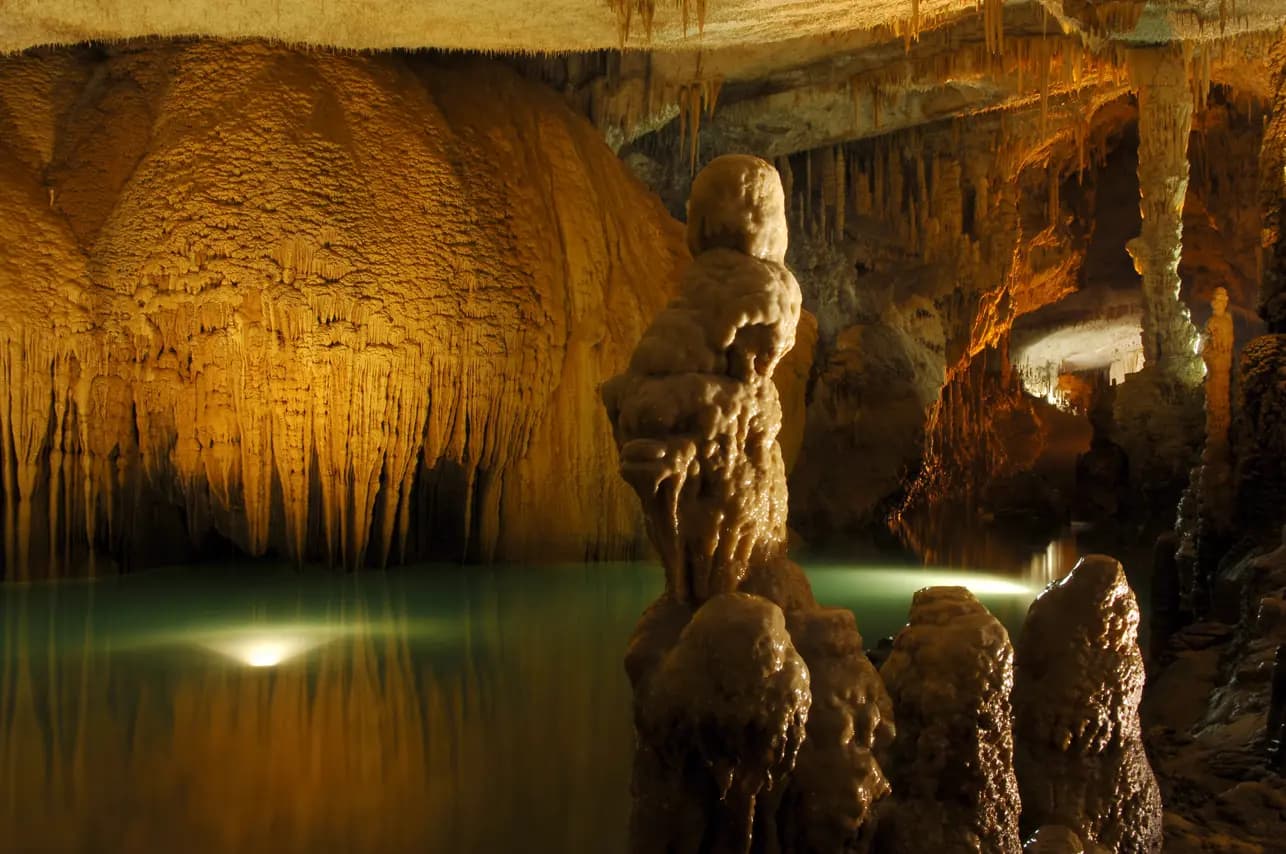
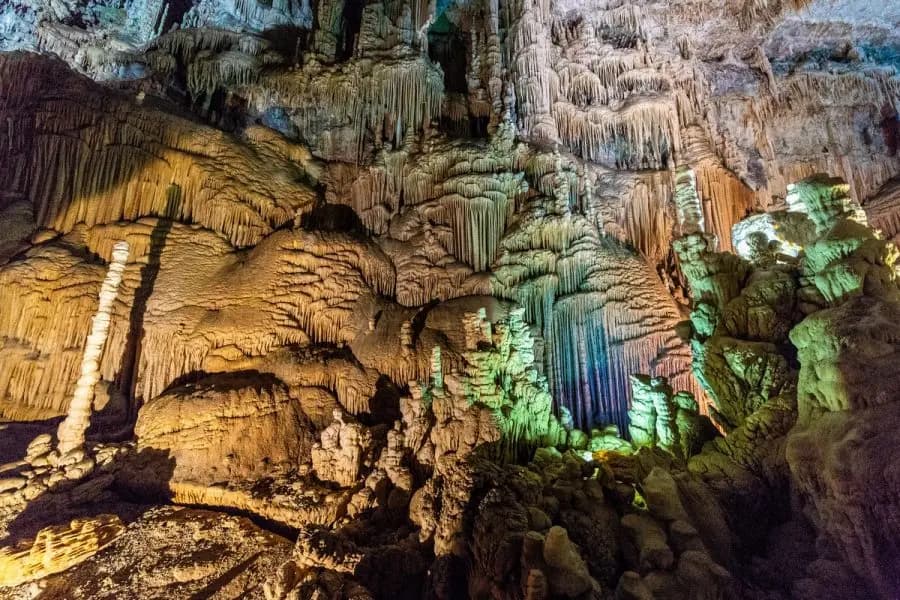
A vast limestone cave system with a walk-through upper gallery and, when conditions allow, an underground boat trip.
Caves and nature
Quick facts
Area
Jeita, Keserwan, Mount Lebanon
Type
Limestone karst cave system
Explored length
About nine kilometres
Visitor sections
Upper cave on foot; lower cave by boat when open
Best for
Nature, geology and family trips
Two levels in one cave system
Jeita has two main levels formed by water over a very long period in the limestone mountains. Around nine kilometres of passages have been explored, but only a smaller section is adapted for visitors.
The upper cave is explored on foot among large formations. The lower cave follows an underground river and is normally experienced by boat when conditions permit.
The upper cave
A purpose-built walkway leads through large, drier chambers of stalactites, stalagmites, columns and folded limestone formations.
Lebanese speleologists discovered the upper galleries in 1958, and the visitor section opened in 1969. More than two kilometres have been mapped, while roughly 750 metres are adapted for visits.
The lower cave and underground river
The lower level follows the underground river connected to the Nahr al-Kalb water system. When conditions allow, a short boat trip passes through dark, water-filled chambers and narrow passages.
Water level, weather and technical operations can close the lower section even when the upper cave is open. Check current status before travelling.
From early exploration to a national landmark
Modern exploration is usually dated to 1836, when the American missionary William Thomson entered the lower cave. Further expeditions gradually mapped more of the system.
Lebanese speleologists played an increasing role from the 1940s. The lower visitor section opened in 1956, the upper galleries were found two years later, and the upper visitor route opened in 1969.
How the formations were created
Rainwater absorbs carbon dioxide and becomes weakly acidic. As it enters cracks in limestone, it slowly dissolves the rock and enlarges passages, chambers and underground waterways.
Mineral-rich drops later deposit calcite in air-filled chambers. Stalactites grow from the ceiling, stalagmites from the floor, and the two can eventually meet as columns. This extremely slow process makes the formations fragile and effectively irreplaceable.
Getting to Jeita from Beirut or Jounieh
Jeita is inland from the coastal road near Jounieh. A pre-booked taxi through a reputable provider, an arranged driver or a hire car gives you control over the return; agree waiting time and the collection point before entering the caves.
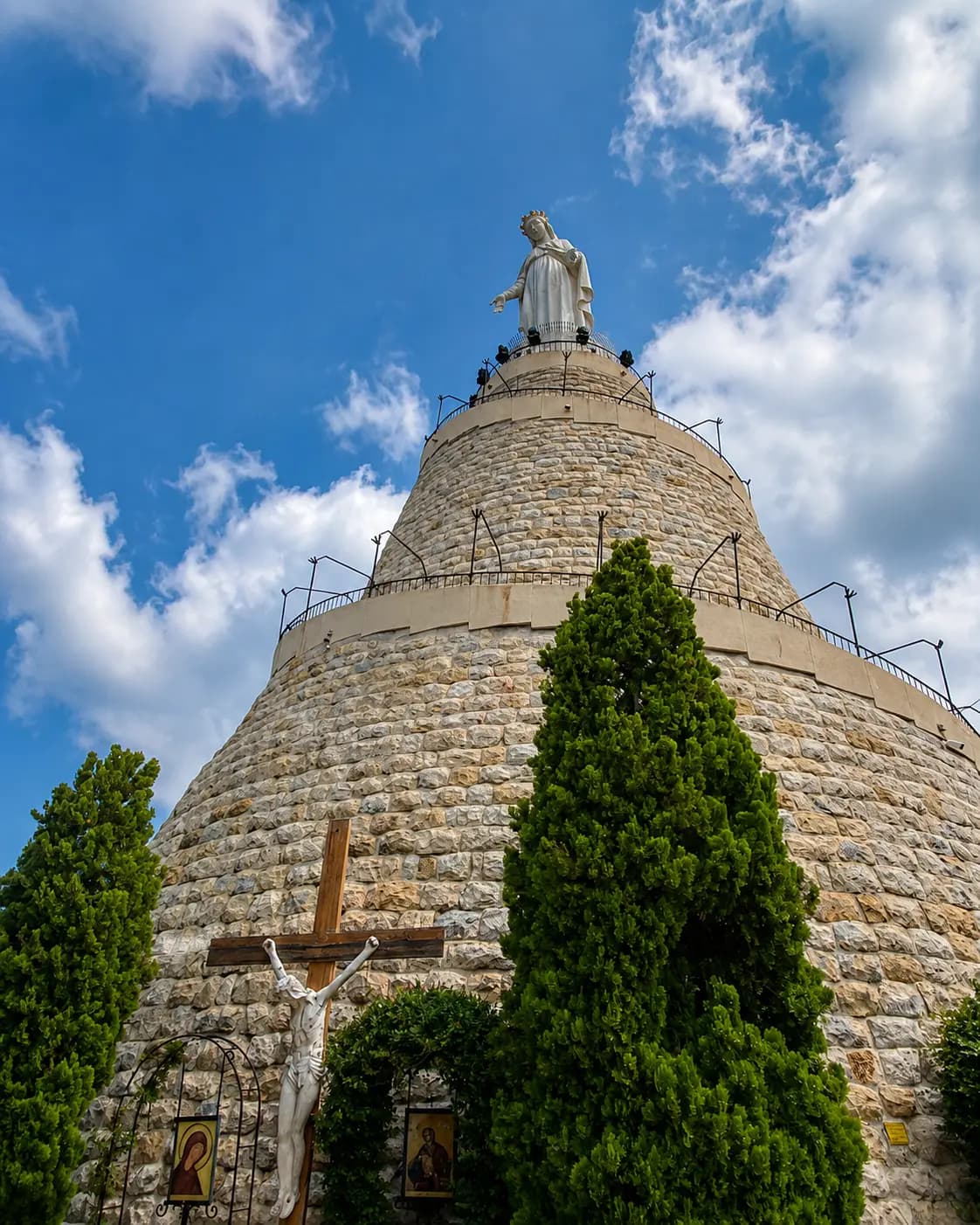
Treat the grotto complex as the main stop for part of the day. If you also visit Harissa, check the operating status of the caves and cable car separately, then decide the order. A long archaeological visit in Byblos is better given its own day.
The upper cave is a walk through large chambers; the lower visit involves boarding a boat when it is running. Darkness, echoes and the movement between different parts of the complex may be as important as the walking distance for young children.
Ask the operator specifically about steps, boat boarding and the route between entrances if travelling with a pushchair, wheelchair or limited mobility. Do not assume that the developed visitor walkway makes the entire complex step-free.
Wear shoes with grip on damp surfaces and bring a light layer. Stay with children on the walkway, and leave the limestone formations untouched.
What to check before setting out
Confirm which levels are open, the last admission and any arrangements for storing cameras or larger bags. Photography is normally prohibited inside the caves; follow the instructions given on arrival.
If the lower cave is closed, decide whether the upper gallery alone suits your plans. It offers the closer look at stalactites, stalagmites and columns, while the boat trip provides a different view of the water-filled cave.
No. Water levels, weather or technical operations can close the lower cave. Check current status before travelling.
How large is the cave system?
Around nine kilometres of passages have been explored, but only a much smaller part is adapted and open to visitors.
Can I take photographs inside Jeita Grotto?
Photography is normally prohibited inside the caves. Check the current rules and any camera-storage arrangements at the entrance, and follow staff instructions.
Is Jeita Grotto suitable for children?
The caves can interest school-age children, but consider darkness, echoes, damp walkways and boat boarding. Ask the operator about pushchairs, steps and any current restrictions before visiting.
Can Jeita be combined with Harissa?
Yes, they are commonly combined by taxi or car when both are open. Allow traffic margin and do not overfill the day.